What Is a Climbing On-the-Wall Movement Assessment — and How Can It Help?
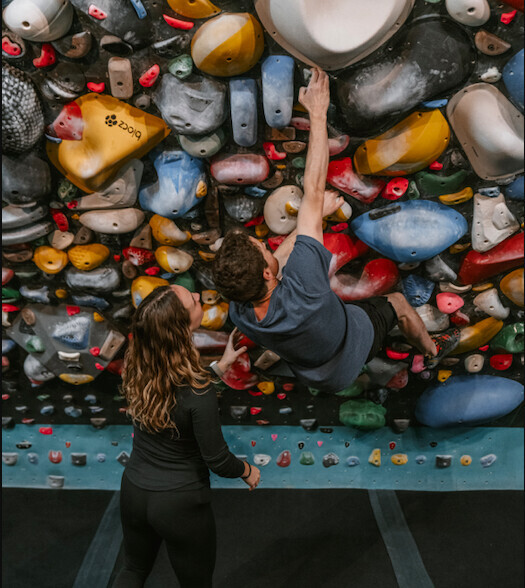
A climbing on-the-wall movement assessment is a physiotherapy assessment performed in the environment where you actually climb. Rather than relying only on standard in-clinic tests, isolated movement screens, or strength measures, this assessment focuses on how you move on the wall—because that’s where climbing injuries develop, and where meaningful, lasting change happens.
This one-hour session is dedicated to observing, analyzing, and refining your climbing movement with the goal of improving efficiency, reducing injury risk, and supporting long-term performance.
What We Look At On the Wall
Your session begins off the wall with a thorough discussion of your injury history, lifestyle, and climbing goals. We also observe general movement patterns and assess relevant strength and control off the wall. From there, we move onto the wall—watching you climb in real time and, when helpful, using video analysis to gain a detailed understanding of how you move.
Key areas we assess include:
Speed of climbing
How quickly and deliberately you move between positions, and whether your chosen speed supports control and efficiency.
Gripping and hold contact
How you load holds, initiate grip, and release—particularly through the fingers, wrist, and shoulder.
Alignment
Joint and body positioning throughout movement.
Intensity and effort
When and how you apply force, and whether you’re compensating or over-recruiting.
Style of climbing
How you move across different angles and styles.
What Happens During the Assessment
Most of the session is spent on the wall. We observe you climbing routes or problems appropriate to your level while analyzing movement patterns with a clinical eye. Video analysis may be used to slow movement and assess details as needed.
Education, drills, and off-the-wall exercises are provided to support your climbing goals.
Why It Matters
Many climbing injuries result from repeated inefficient movement patterns, or poor technique. This assessment bridges physiotherapy with real-world climbing to support long-term performance.
Contact info@bolderhealth.ca for more information or book online!

Kayla Eagle
Contact Me